The Novella as a Literary Form
 In a 2012 New Yorker article, the celebrated writer, Ian McEwen, made the provocative statement that, “I believe the novella is the perfect form of prose fiction.”[1] Challenging as that statement is, it nevertheless speaks to a larger truth about the novella. Uniquely placed between the conciseness of the short story and the expansive nature of the novel, the novella challenges the writer to adroitly explore characters, settings, landscapes, themes, emotions, and conflicts within its distinctive form.
The novella – the term comes from the Italian word novello (meaning ‘new’) – has its roots in the literature of the early Italian Renaissance, first appearing in the form of the tales (novellas) that comprise The Decameron, an imaginative work by the fourteenth century writer, Giovanni Boccaccio.
As with any form of prose fiction, the novella’s particular constraints place several demands upon the writer:
A Precision of Writing
For a work of prose fiction to be considered a novella, the word count is generally agreed to fall between 17,000 and 40,000 words (approximately 70 to 160 pages). Consequently, the writer must write precisely about the characters, themes, landscapes, emotions, and conflicts they want to explore in-depth.
A Concentration of Focus
A novel allows the writer time and space to develop several sub-plots and to gradually build up the plot and the characters, but the novella is a much more demanding form of prose fiction – it requires the writer to grab the reader’s immediate interest and maintain it for the length of the story. As the writer, Ian McEwen, states, the reader’s attention must, “be held in mind at first encounter.“[2]
An Ambiguous Ending
While the conclusion of a novel may bring together the various strands (sub-plots, conflicts, etc.,) of the story, the novella oftentimes ends inconclusively, prompting the reader to consider the implications of the theme, conflict, or character study they have immersed themselves in.
Classic Novellas
The list of novellas is varied in terms of theme, character, emotion, setting, and conflict, but the following are considered some of the classics of the form:
Heart of Darkness by Joseph Conrad (1899)
Ethan Frome by Edith Wharton (1911)
The Dead by James Joyce (1914)
The Metamorphosis by Franz Kafka (1915)
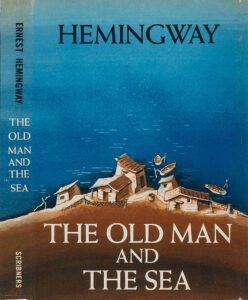
The Old Man and the Sea by Ernest Hemingway (1952)
[1] Ian McEwen, “Some Notes on the Novella,” The New Yorker, October 29, 2012, newyorker.com.
[2] Ian McEwen, “Some Notes on the Novella.”